The new minister named 10 primary measures to respond to the needs of the population:
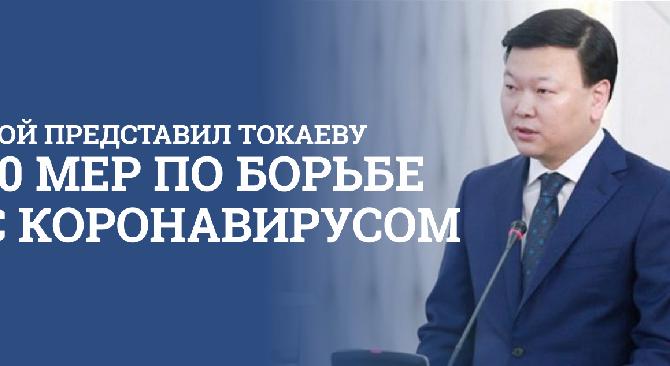


The new minister named 10 primary measures to respond to the needs of the population:
- development of simple and understandable instructions for the treatment of infection on an outpatient basis;
- acceleration of procedures for the supply and purchase of medicines, stimulation of domestic producers;
- increasing the availability of diagnostics by expanding the use of digital x-ray machines in the diagnosis of COVID-19 together with computed tomography;
- expanding the capacity of laboratories for testing, timely delivery of tests;
- organization of test fences by mobile teams during calls;
- the most safe for patients medical care at home;
- Introduction of distance consultations at the outpatient level;
- equipping hospitals with ventilation devices;
- changing the order of burial;
- increasing the epidemiological alertness of citizens.
"Tools for social and labor adaptation will be introduced, corporate responsibility will be increased, the potential of information technologies will be realized at the public level," the minister said.
According to the minister, the development of systematic measures to implement the principles of “together against COVID-19” is necessary at the government level. A clear delineation of powers at the central level and akimats is required, including the formation of financial reserves in case of epidemiological threats.
The implementation of the principle "together against COVID-19" involves three successive stages. Preparatory - two weeks, quarantine (from two to four weeks) and the transition to the full implementation of the principles "together against COVID-19".
"At the preparatory stage, the resource saturation of health systems, the satisfaction of the acute needs of the population in medical care and the organizational training of medical workers must be ensured."
“The quarantine period will help to break the chain of mass spread of infection among the population. The work on the legal framework and information work with the population and business will be carried out in the same period. The implementation of the“ together against COVID-19 ”principle in the third stage provides for the implementation of measures to consolidate long-term positive effects. The tasks of stabilizing the situation with COVID-19 will be addressed in parallel, "said Tsoi.
According to the minister, a set of measures to stabilize the situation should be divided into five blocks.
On the organization of medical care:
1) additional financing of measures to counteract COVID-19;
2) revision of the tariff policy;
3) motivation of health workers;
4) diagnosis of coronavirus; adjustment of the state health program action plan for 2020-2025.
“Since June 10, we have seen a significant increase in pneumonia with a pronounced clinic of COVID-19 and a negative polymerase chain reaction test result. In recent days, registration has reached 2.5 thousand new cases of such pneumonia per day. Our experts have forecasted the number of cases and the necessary infrastructure for three main scenarios for the development of the epidemiological situation, "he said.
In the first scenario, without quarantine, by the end of August, 27 thousand cases of COVID-19 requiring hospitalization will be recorded every day. The need for infectious and provisional beds is estimated as 300 thousand.
The second scenario provides for a two-week national lockdown, with up to seven thousand cases per day requiring hospitalization. The need for places for patients at the end of August will be 80 thousand.
The third scenario shows the development of the epidemic if a four-week lockdown is imposed. Then, at the end of August, 2500 cases per day requiring hospitalization will be recorded, and the need for beds will increase to 30 thousand, which generally corresponds to the current situation. “I consider this forecast to be the most effective in terms of the existence of an open chain of infection among the population, as well as the preparation of the appropriate infrastructure,” the minister added.
At the same time, according to him, a group of Kazakhstani scientists is studying bacterial and viral etiology and pathogenesis in patients with severe pneumonia and an unconfirmed diagnosis of COVID-19 in six large cities with high morbidity and mortality rates.
"These studies will reduce the complications in patients with severe forms of the disease through the use of vaccines. The research results will be available on July 3. They will allow you to decide on the possibility of their use for people at risk. It is necessary to use all available resources in the country. Taking into account the epidemiological situation I consider it necessary to empower the Akimats with the authority to attract and re-profile hospital beds, regardless of the form of ownership and the level of jurisdiction, "Tsoi concluded.
 Related news

Energy University News


